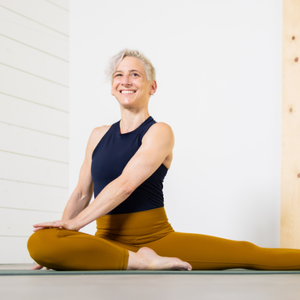
From City Planning to Iyengar Yoga
My Unexpected Trajectory

Table of Contents
Life Before Yoga
Growing up, I was not what anyone would call athletic. I loved books, writing, and art. I was curious, reflective, and often tangled in big philosophical questions: What is the meaning of life? Why are we here? I also loved the outdoors, hiking and camping, developing an early bond with nature that eventually led me to study Environment & Resource Management at the University of Toronto.
At first, I was captivated by the wilderness. However, my curiosity soon shifted to cities. What makes a city sustainable? Why does community matter? I pursued those questions through academia, activism, art, and professional consulting. Yet, after years of writing policy documents destined for dusty shelves, I felt frustrated. I craved design and the tangible satisfaction of building something. That longing led me to UC Berkeley’s College of Environmental Design, where I threw myself into the Master’s program with the enthusiasm of someone who had found her calling.
But life had other plans.
When Pain Took Over
In late 1999, on a ski trip in Switzerland, I woke one morning in excruciating pain. I couldn’t stand straight. Soon after, I was diagnosed with two severely herniated discs, degenerative disc disease, and scoliosis. I was only 23.
The pain was relentless, burning through my back, radiating down my leg, wrapping around my days and nights without reprieve. I tried everything: physiotherapy, acupuncture, swimming, and medication. Nothing gave me lasting relief. Still, I pressed on with graduate school, clinging to purpose. By the time I graduated, I was barely functioning. My husband had to care for me. My parents helped me pack and move home. On paper, I had “promise.” Inside, I felt broken.
The years that followed were some of my darkest. Conservative treatments failed. The optimism that carried me from therapy to therapy thinned under the weight of disappointment. My independence, once a point of pride, evaporated. Depression and anxiety moved in. Still, I fought to believe that something might help. Eventually, I agreed to surgery.
In 2005, I had a discectomy and spinal fusion. I went into it knowing the odds for success but after 6 years of relentless pain, I felt desperate––it was a risk I was willing to take. When I awoke after surgery, I still had pain. The nerve pain persisted. The back pain persisted. The surgeon told me recovery could take a year. He advised me to begin rehab and suggested yoga, pilates, or physiotherapy.
A family member had recently mentioned Iyengar Yoga and I was taken by her confidence in the teachers and potential of the practice. She assured me the teachers would know how to keep me safe. That invitation changed the trajectory of my life.
The First Glimpse of Hope
From my very first class at Yoga Centre Toronto, I was hooked. For the first time in years, I felt more than my pain. The teacher treated me as capable, adapting the practice where needed but never sidelining me. Those classes became the highlight of my week.
I won’t pretend the pain disappeared; it didn’t. At first, it was as relentless as ever. But I began to notice something else: my mood shifted. The depression eased. My body felt steadier, even if the pain remained. I began attending three times a week. I swam. I did acupuncture. Slowly, something inside me rekindled.
After two years of practice, I began to notice small but undeniable improvements in my physical health. My days were still shaped by pain, but during class, I felt glimpses of possibility. Iyengar Yoga wasn’t just exercise; it was a lifeline.
Teacher Training: A Turning Point
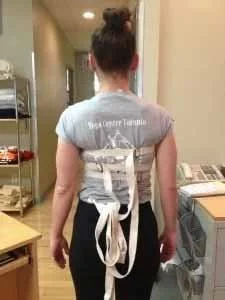
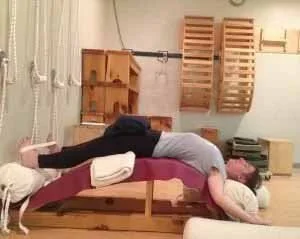
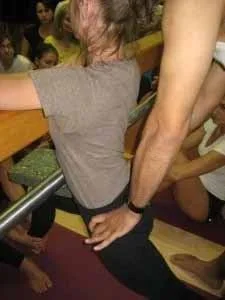
In time, I dared to consider becoming a teacher. Could someone who still needed modifications guide others? My Senior Teacher, Marlene Mawhinney, encouraged me. She said personal struggle often shapes excellent teachers. In 2008, I entered the rigorous three-year training program at YCT.
Teacher Training demanded discipline: weekly classes, apprenticeships, home practice, written assignments, workshops, and intensives. I threw myself into it fully. By the second year, something remarkable happened. My pain shifted. It was still there, but less consuming, less defining. It became manageable.
Looking back, I think those first three years of practice were like planting seeds. The benefits didn’t appear immediately, but they were accumulating quietly inside me. Around the three-year mark, the seeds began to sprout. My health improved. The benefits began to snowball, and they’ve continued to ever since.
Choosing Yoga as a Life
In 2010, I attempted to return to consulting. Within months, the pain flared again. I realized the truth I had resisted: a career in an office would cost me my health. For years, I wrestled with identity. Could I really call myself a yoga teacher? Did that “count” as a career? Eventually, I realized the question wasn’t whether it counted, it was whether it gave me life.
By 2011, I had fully embraced the path. I completed Teacher Training, travelled to Pune, India, to study with the Iyengar family, and passed my national assessment in early 2012.
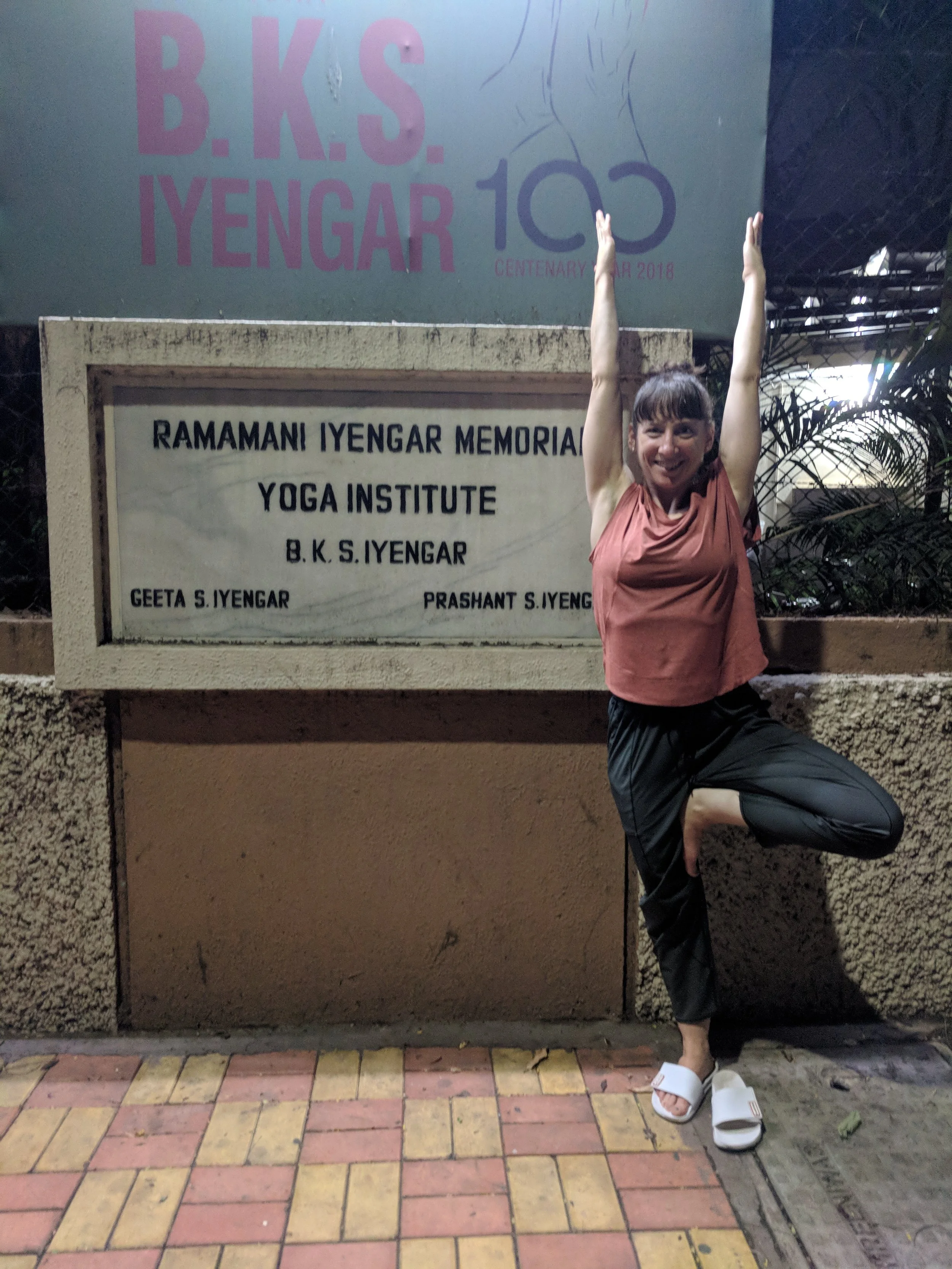
Today, my life is devoted to Iyengar Yoga. I continue to study annually with my teachers in India and I am wholly committed to the small but robust community at Studio Po. My hope is for there to always be a place for students to discover the gifts of Iyengar Yoga. I thought I came to this practice to heal my back but little did I know that it’d be the joy of self-embodiment to truly cement my love for, and commitment to, Iyengar Yoga.
With immense gratitude, I aim to give back through teaching. I share what I know with students of all abilities, genders, and ages. I bring to my teaching both the rigour of my training and the lived experience of someone who knows pain intimately.
Looking Back, Looking Forward
The journey from agony to practice wasn’t quick. It wasn’t easy. There were years of despair, disappointment, and doubt. But Iyengar Yoga gave me more than pain relief; it gave me hope.
I can now say with contentment and conviction: there is no turning back.
If you’re living with back pain or simply searching for a way to feel more at home in your own body, I invite you to try Iyengar Yoga for yourself. You don’t need to be flexible, experienced, or pain-free to begin. What you do need is curiosity, patience, and the willingness to start where you are. My journey taught me that real change happens quietly, one practice at a time. Perhaps your first step onto the mat will be the beginning of your own transformation 💜🙏💚
FAQ
-
Yes. In my own journey, Iyengar Yoga became a turning point after chronic back pain and spinal surgery. Its therapeutic approach emphasizes alignment, props, and precise sequencing, which can relieve tension, build supportive strength, and improve posture safely. Studies show structured Iyengar practice can reduce chronic spinal pain and enhance mobility more effectively than exercise alone. Because every posture is thoughtfully adapted, even those with pain can access poses without strain.
-
Iyengar Yoga can be very supportive for scoliosis. The method emphasizes spinal alignment, balance, and breath awareness, all tailored to each student’s body. In my own practice and teaching, props and modifications allow students with curvature to safely strengthen supportive muscles and improve mobility. While research is emerging, many find it a gentle yet effective way to manage discomfort and develop body awareness.
-
Yes. Arthritis often limits joint movement, but Iyengar Yoga offers carefully adapted postures using props to protect sensitive joints while building strength and flexibility. Its focus on alignment helps distribute weight evenly, easing pressure on arthritic joints. For students in my classes with arthritis, the method allows a consistent, mindful practice that can improve mobility, posture, and overall comfort.
-
Iyengar Yoga is for anyone who wants a safe, precise, and thoughtful practice — beginners, seniors, athletes, and those managing chronic pain or structural issues like back pain, scoliosis, or joint stiffness. Its use of props and attention to alignment makes it accessible and therapeutic, helping students explore their bodies with clarity and confidence.
-
Yes. Whether it’s back pain, joint stiffness, or postural discomfort, Iyengar Yoga provides a therapeutic, alignment-focused approach that supports the body safely while strengthening muscles and improving flexibility. In my own experience, this method offered tools for long-term relief when conventional treatments weren’t enough. Props, sequencing, and individualized attention help students find stability and comfort, making yoga a practical part of chronic pain management.
-
Iyengar Yoga stands out for its precision, alignment, and use of props. Every adjustment and sequence is purposeful, which makes it especially supportive for beginners, people with injuries, or anyone seeking a deeper understanding of their body. In my own path from city planning to teaching, this method showed me how small, precise movements could enhance both physical and mental resilience.
Want Po in your inbox?
Stay connected with new articles, videos, and updates from the studio.