What is Iyengar Yoga
And what to expect as a student of the method
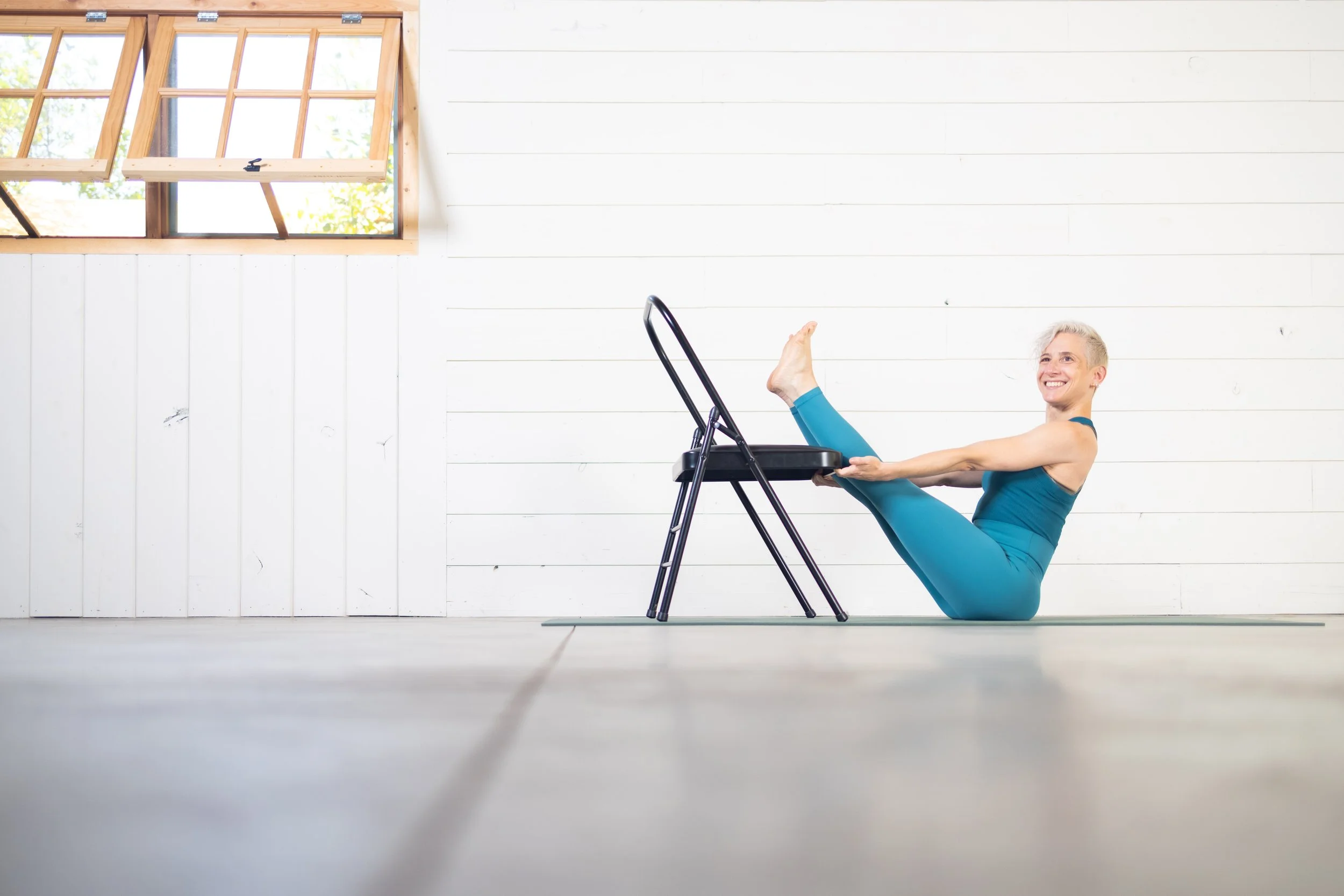
Table of Contents
Introduction
What is Iyengar Yoga?
Iyengar Yoga is a method of yoga that emphasizes precision, sequencing, and adaptability. Rather than applying a one-size-fits-all approach, it responds to the individual—changing depending on who is practicing, when they practice, and why they practice.
In my experience, this is what makes Iyengar Yoga so powerful. It’s not defined by a single style or pace, but by how intelligently it meets the practitioner.
When I try to define Iyengar Yoga, it often feels incomplete—because at its core, the method is responsive. This means that it "changes" depending on who is practicing, when they practice, and why they practice. Iyengar Yoga is quite literally the antithesis of one-size-fits-all yoga!
For some, Iyengar is slow, methodical, and particularly suited to accommodate their sore knees and cranky backs. For others, Iyengar is strong, dynamic, and a challenging complement to other wellness practices. For some, Iyengar is characterized by the use of props, for others it's about playful inversions, and for others still, the crux of the method is its attention to detail and the resulting alignment of mind and body.
I'm reminded of a quote from BKS Iyengar, after whom this approach to yoga was named:
"Words cannot convey the value of yoga – it has to be experienced." ~ BKS Iyengar
So true! Every experience I've had with Iyengar Yoga is different. And yet, in spite of all this difference, there is something uniquely Iyengar in each of the ways the method is interpreted and conveyed.
While each experience may look different, there are consistent principles that shape the method.
Who is Iyengar Yoga for?
Iyengar Yoga is particularly well-suited for beginners, as well as anyone looking for a more thoughtful and individualized approach to practice. Because of its emphasis on precision, sequencing, and adaptability, it can support a wide range of needs—from building strength and flexibility to working with injury or chronic pain.
At the same time, the depth of the method continues to challenge and engage more experienced practitioners, offering a lifelong path of learning.
Four Facets of Iyengar Yoga
Let’s explore 4 facets that contribute to the Iyengar Yoga experience.
1. Precision
I went to my first Iyengar class in 2004, and what I most remember was the clarity of the teaching instructions. I was told where to place my foot and how to turn my thigh. The precise, deliberate style of teaching made it clear that the teacher was observing and responding to each student in the room. As someone coming to the practice with a history of debilitating back pain, I appreciated this. I felt seen and safe. I remember being conscious of how included I felt, despite needing to modify my poses. I’d look around the room and see the same pose being practiced 3 or 4 different ways. This was incredibly comforting.
The precision of the teaching also offered me a focus. It gave me a thread that I could hold on to for the duration of the class. I later came to learn that this was an integral aspect of the method. Often referred to as "meditation in action", the specificity of the instructions are used as a gateway inward, thereby encouraging the ultimate alignment of mind and body.
2. Sequencing
Sequencing refers to the order of poses that are presented in a class, and in Iyengar Yoga, this is never random.
Many Iyengar schools loosely structure their classes according to a 4-week cycle based on families of poses:
Standing Poses
Forward Extensions
Backward Extensions
Restorative Asanas & Pranayama
This approach to sequencing helps to ensure that a broad mix of poses are incorporated into regular rotation within each month. But what it also does is accentuate the "flavour" of each family.
I used to work at the front desk of an Iyengar Yoga centre and I remember noticing how different the vibe was when classes let out on backbend week vs forward bend week. After backbends, there’d be chatter and excitement post-practice, and on forward bend week, a certain air of quiet. It seemed - and I knew it to be true from my personal practice - that there was an introspective nature to certain practices and an extroverted one to others.
This idea - that sequences can be structured to facilitate a particular response, physical, mental, or emotional - is so powerful, and the skill of crafting sequences in this manner is something that Iyengar Yoga teachers are exceptionally good at. Classes may be sequenced to alleviate back pain, boost mood, increase confidence, or focus attention. They may be sequenced to address a particular action like external rotation at the hip, or to help students progress toward a challenging asana. No matter what class you are in, you can be sure that the sequence is strategic and deliberate.
3. Timing
Sometimes, asanas are practiced in quick succession, and other times, individual poses are held for a longer duration. There are several reasons why in Iyengar Yoga you might choose to be deliberate with your timing. For example:
If you are feeling sluggish, a dynamic practice may be exactly what you need to lift the energy up.
If you are feeling exhausted, a slow, methodical practice might be the better way to rejuvenate and nourish yourself.
If you are feeling agitated, a quick succession of asanas combined with multiple repetitions may be highly effective for channeling nervous energy.
And If you are feeling scattered, a deliberate practice with long holds will help you focus your mind.
Within Iyengar Yoga, there’s also this fascinating idea that each asana has a gestation period. As you spend time in a pose, you get to know that asana more intimately, which then opens up avenues for personal reflection and meaningful insight.
There isn’t one right way—and there shouldn’t be. The beauty of the Iyengar method is that it teaches us how to explore many options and call upon them if and when appropriate.
4. Creativity
Finally, creativity shows up in Iyengar Yoga in a myriad of ways, but there are two that always stood out to me.
In Iyengar Yoga, how you do the pose is almost always informed by why, and this sets the stage for practicing the same pose many different ways. Are you practicing Utthita Trikonasana for your shoulders or for your hips? To build confidence or to focus the mind? By necessity, this mode of inquiry is a floodgate for creativity!
And quite likely, it was this "how depends on why" mode of inquiry that first led BKS Iyengar to introduce the use of props, which is yet another opportunity for creativity—something explored more deeply in my article on the use of props in Iyengar Yoga. Simple props such as blocks, blankets, and chairs not only help make asanas more accessible but they do so by celebrating human variation. For example, if someone has a long torso and short legs, it makes good sense that they may need to practice differently than someone with a short torso and longer legs.
In addition to improving accessibility, creative prop usage is a quintessential learning tool. Even if you can perform an asana without a prop, there are times when inserting one can help clarify a particular action or drive home a specific lesson. BKS Iyengar himself has been quoted as saying, "The wall is my guru" because he received so much feedback about his poses by practicing against the wall.
To wrap up
It’s easy to assume that an emphasis on precision would lead to rigidity, but in practice, the opposite is true.
Iyengar Yoga is both exacting and creative—structured, yet deeply responsive. Whether through asana, sequencing, or the use of props, the method continually invites inquiry and adaptation.
And in my teaching, I often emphasize this responsiveness because it’s what makes Iyengar Yoga so compelling—it invites each student into a process of observation, adjustment, and understanding over time.
Ultimately, Iyengar Yoga doesn’t just teach you what to practice. It teaches you how to observe, respond, and understand your own experience more clearly.
A version of this article was originally published on Yoga Anytime.
FAQ
-
Iyengar Yoga is a method of yoga that focuses on precise alignment, clear instruction, and adapting poses to suit each individual.
-
Yes. Iyengar Yoga is especially well-suited for beginners because of its clear instruction, use of props, and emphasis on building understanding step by step.
-
Iyengar Yoga emphasizes precision, sequencing, and adaptability. Rather than following a fixed flow, classes are structured to support specific outcomes and respond to the needs of the practitioner.
-
No. Flexibility is not a requirement. Props and modifications allow each student to work appropriately for their body while gradually developing strength, mobility, and awareness.
-
It can be both, depending on the class and the intention behind it.
Want Po in your inbox?
Stay connected with new articles, videos, and updates from the studio.