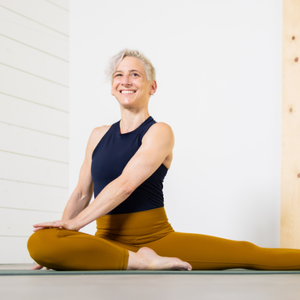
Do You Have a “Good Side”?
I used to think I did.Table of Contents
Very early in my practice, I noticed that my right side seemed more capable. In standing poses like Utthita Trikonasana and Utthita Parsvakonasana, I could lengthen more clearly to the right. My trunk felt more spacious. My palm would land lower.
It felt decisive.
Right side: good.
Left side: the one that needed work.
But yoga had a way of exposing my oversimplifications.
When I began paying closer attention — really mapping it out — the story became far less tidy.
In:
Eka Pada Sarvangasana
Parsvaika Pada Sarvangasana
Utthita Hasta Padangusthasana
My right side consistently behaved “better.”
But then came:
Virasana
Supta Virasana
Parsva Sirsasana
Janu Sirsasana
Bhekasana
And suddenly, the left side was more available.
So I looked deeper.
What if it wasn’t about strength?
What if it wasn’t about flexibility?
What if it wasn’t even about right versus left?
One of the most challenging actions for me is opening the middle groin and lengthening the front of the thigh — particularly on the right. When I looked again, a pattern began to emerge.
In the poses where the front thigh needed to lift up and move inward toward the pelvis, the right side appeared competent.
In the poses where the front thigh needed to lengthen away from the pelvis, the right side struggled — and the left side was clearer.
Just as I thought, “now, I’m getting somewhere,” I realized that when I lift into Sirsasana from bent knees, my right hip drops.
That stopped me.
The very groin I had considered reliable in one context didn’t organize in another.
There it was.
No good side.
No bad side.
Only relationship.
B.K.S. Iyengar said, “When every asana is multi-petaled, why do you make it single-petaled?”
We do this constantly. On the mat. In life.
We reduce something complex into a simple label because it feels stable. Manageable.
But every asana is layered. Every action influences another. A tight groin can distort the spine. A dropped hip can alter the breath. Cause and effect move through us whether we are paying attention or not.
In yoga philosophy, there is a concept called right knowledge — pramāṇa. It asks us to question whether what we think we know is actually true, or simply convenient.
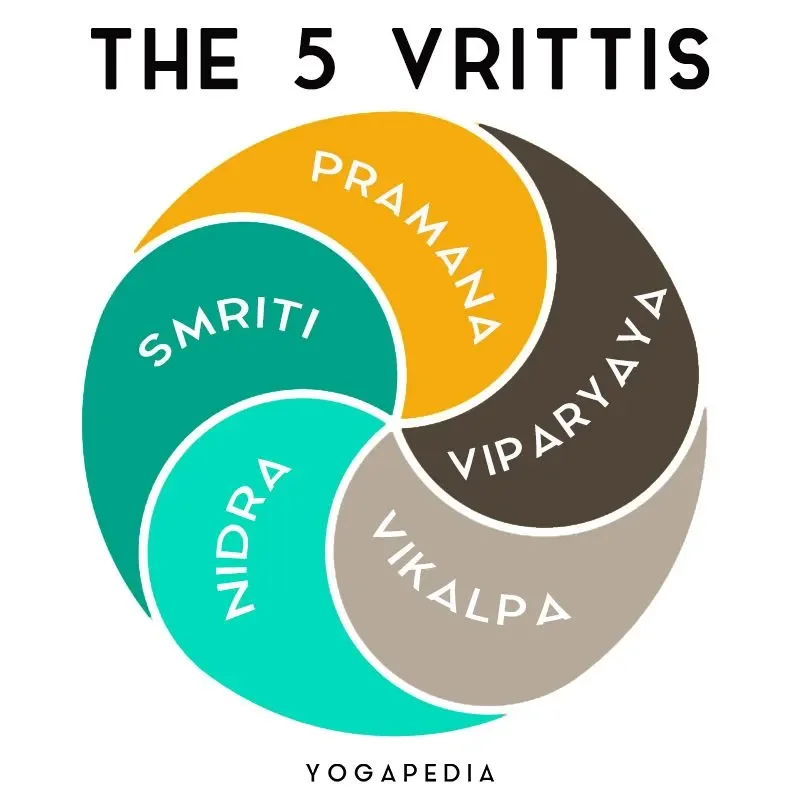
Every observation, every “knowing” is a vṛtti — a movement in the mind. Pramāṇa, right knowledge, is the wave that keeps curiosity alive.
That day, I could see how quickly I had taken a partial truth as a complete one.
Practice, when we are paying attention, keeps refining that seeing.
It asks us to test our assumptions.
To observe more carefully.
To stay a little longer before arriving at conclusions.
So the next time one side feels easier, stronger, more obedient — pause before crowning it a winner. Stay curious. There may be a petal you haven’t examined yet.
And, there is something deeply satisfying about leaving your mat not with certainty, but with sharper questions.
FAQ
-
Each pose contains many layers of action, awareness, and relationship. Rather than focusing on a single goal, Iyengar Yoga invites us to explore how different parts of the body influence one another and how understanding deepens over time.
-
Pramāṇa is often translated as "right knowledge." It reminds us to question our assumptions and remain open to new understanding, rather than mistaking a partial observation for the complete picture.
-
Curiosity keeps the practice alive. Instead of judging what is "good" or "bad," students learn to observe more carefully, ask better questions, and respond with greater intelligence and sensitivity.
Want Po in your inbox?
Stay connected with new articles, videos, and updates from the studio.