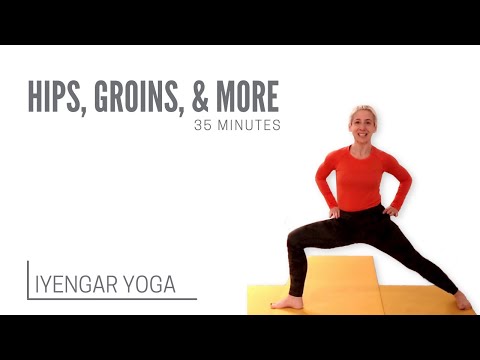
30-Min Iyengar Yoga for Virasana: Stiff Ankles & Cranky Knees
A 30-minute Iyengar Yoga practice dedicated to Virasana (Hero Pose), one of the foundational seated asanas in the Iyengar Yoga method. Through a series of thoughtful variations, you'll learn how to work safely with stiff ankles and sensitive knees while discovering the many ways this pose can be adapted to suit your body.
Rather than searching for one "correct" presentation, this class explores how the purpose of the pose influences the way we practice it. By understanding why we choose a particular variation, Virasana becomes a rich opportunity for observation, problem-solving, and self-study.
Continue your practice inside Po Online where we build on these foundations with structured classes, progressions, and deeper study.
About This Practice
Virasana often appears to be a simple seated pose, but for many students it can be one of the most revealing. Tight ankles, restricted quadriceps, and sensitive knees all influence how the pose is experienced.
This practice introduces a variety of approaches that help students work more comfortably while maintaining the essential actions of the asana. You'll also explore useful preparations before entering Virasana, along with complementary poses to practice afterward.
A central theme of the class is an important Iyengar Yoga principle: how you practice a pose depends upon why you are practicing it. Learning to ask that question opens the door to a more intelligent, individualized, and rewarding yoga practice.
What You'll Practice
Virasana (Hero Pose)
Variations of Virasana
Improving ankle mobility
Working safely with sensitive knees
Preparing the body for Hero Pose
Counterposes following Virasana
Understanding the purpose behind different presentations
When to Use This Practice
When Virasana feels uncomfortable
To improve ankle mobility
When working with stiff knees or ankles
To better understand Hero Pose
As a focused study of seated pose alignment
Who This Is For
Students who find Virasana challenging
Practitioners with stiff ankles
Students working with sensitive knees
Anyone exploring seated poses in greater depth
Both beginner and experienced Iyengar Yoga practitioners
Frequently Asked Questions
Why is Virasana difficult for so many students?
Virasana requires mobility through the ankles, knees, and quadriceps. Restrictions in any of these areas can make the pose feel uncomfortable or difficult to access.
Can Virasana be modified?
Yes. One of the strengths of Iyengar Yoga is using thoughtful variations and props to make poses more accessible while preserving their essential actions.
Why practice poses before and after Virasana?
Preparing the body beforehand helps improve comfort and accessibility, while practicing complementary poses afterward helps restore balance and ease throughout the legs and knees.
Is knee discomfort normal in Virasana?
Students should distinguish between muscular sensation and joint discomfort. Virasana should never create sharp pain in the knees. Appropriate modifications allow students to work safely while gradually improving mobility.
Why are there so many different ways to practice Virasana?
Different presentations serve different purposes. The most appropriate variation depends on the individual student, their body, and the intention behind the practice.
Is this practice suitable for beginners?
Yes. The class provides multiple entry points into Virasana, making it valuable for beginners while offering new insights and refinements for experienced practitioners.
Continue Your Practice
If you enjoyed this class, you can continue your practice across the Studio Po ecosystem:
Practice in-person at Po Toronto
Explore full-length classes inside Po Online
Read reflections and insights on Stephanie’s Blog