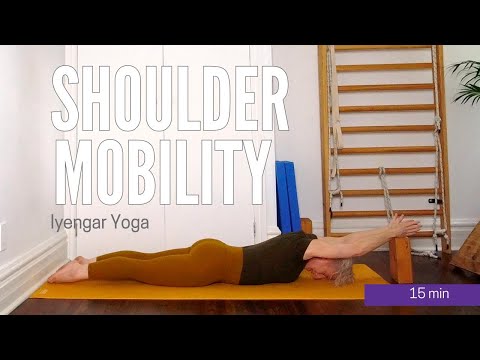
30-Min Hip Stability Practice: Broadening & Compacting Actions | Iyengar Yoga
A 30-minute Iyengar Yoga practice focused on strengthening and stabilizing the hips through the coordinated actions of broadening the front pelvis and compacting at the hips. These complementary actions help create stability and ease in standing and balancing poses.
Continue your practice inside Po Online, where we build on these foundations with structured classes, progressions, and deeper study.
About This Practice
This class looks at how the hips function in standing and balancing poses by working with two key actions: broadening across the front pelvis and compacting at the outer hips. When these actions are understood and applied together, they create a more stable and integrated base.
Rather than focusing on effort alone, the emphasis is on coordination—how different parts of the body work together to support balance and alignment. These actions are explored across several foundational poses to clarify how the hips support the entire posture.
What You’ll Practice
Tadasana (Mountain Pose)
Ardha Uttanasana (Half Forward Fold)
Utthita Trikonasana (Extended Triangle Pose)
Ardha Chandrasana (Half Moon Pose)
Vasisthasana (Side Plank Pose)
Exploring how to broaden the front pelvis and compact at the hips
Applying these actions in standing and balancing poses
When to Use This Practice
When working on hip stability in standing poses
To improve balance and coordination
As a focused session on hip mechanics
When refining alignment in foundational poses
Who This Is For
Students working to improve stability in standing poses
Practitioners exploring how the hips support balance
Anyone wanting to better understand hip actions
Experienced students refining coordination and alignment
Frequently Asked Questions
Below are some common questions about this practice and how to get the most out of it.
What does it mean to broaden the front pelvis?
Broadening the front pelvis refers to creating space across the front of the hips without gripping or tightening. This helps prevent collapse and allows for more even distribution of effort.
Why are these two actions used together?
These actions are complementary. Broadening creates space, while compacting provides support. Together, they help stabilize the pelvis and improve coordination in the pose.
How does this help with balance poses like Half Moon or Side Plank?
When the hips are stable, the rest of the body can organize more effectively. These actions help prevent wobbling or collapsing, making balancing poses feel more steady.
Is this suitable for beginners?
Yes. While the concepts are detailed, the poses are foundational. Beginners can start to build awareness, while more experienced students can refine their understanding.
What style of yoga is this?
This class is taught in the Iyengar Yoga method, which emphasizes precision, alignment, and understanding how actions in the body create stability and ease.
Continue Your Practice
If you enjoyed this class, you can continue your practice across the Studio Po ecosystem:
Practice in-person at Studio Po Toronto
Explore full-length classes inside Po Online
Read reflections and insights on Stephanie's Blog