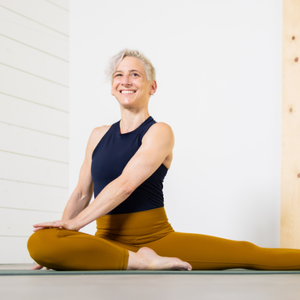
Can Iyengar Yoga Relieve Back Pain?
Why healing your back is about more than just stretching
Table of Contents
Debilitating lower back pain is what led me to Iyengar Yoga. For a decade, I tried everything from physiotherapy to surgery, and still felt like I wasn’t able to access the root of the issue. It wasn’t until I stepped into my first Iyengar Yoga class that something shifted—literally and figuratively.
And I'm not alone. Many students come to Iyengar Yoga hoping to find relief for their aching backs. What they discover, often to their surprise, is that the method offers not just relief but a re-education of how to move, stand, sit, and be in their bodies.
Alignment: The Foundation of Relief
At the heart of Iyengar Yoga is alignment—not in a rigid or cosmetic sense, but in a deeply functional one. When the bones are aligned, the muscles can work more efficiently, and strain on the joints (especially the spine) is reduced. Misalignment often leads to compensation patterns that aggravate back pain over time. Correcting this isn’t about looking a certain way in a pose; it's about learning what alignment is optimal in your body (there isn’t just one right alignment!) and freeing the spine from patterns that keep it locked in pain.
Alignment isn’t just physical—it’s also internal. When our attention is anchored in the body, when breath and action move in synchronicity, we begin to experience a different kind of ease. This alignment of mind and body creates the conditions for healing to take root. The pose becomes a place not just of physical support, but of mental clarity and calm. And that kind of alignment can often be more powerful than people realize.
Alignment isn’t just physical—it’s also internal. When our attention is anchored in the body, when breath and action move in synchronicity, we begin to experience a different kind of ease. This alignment of mind and body creates the conditions for healing to take root. The pose becomes a place not just of physical support, but of mental clarity and calm. And that kind of alignment can often be more powerful than people realize.
Props: Support That Heals
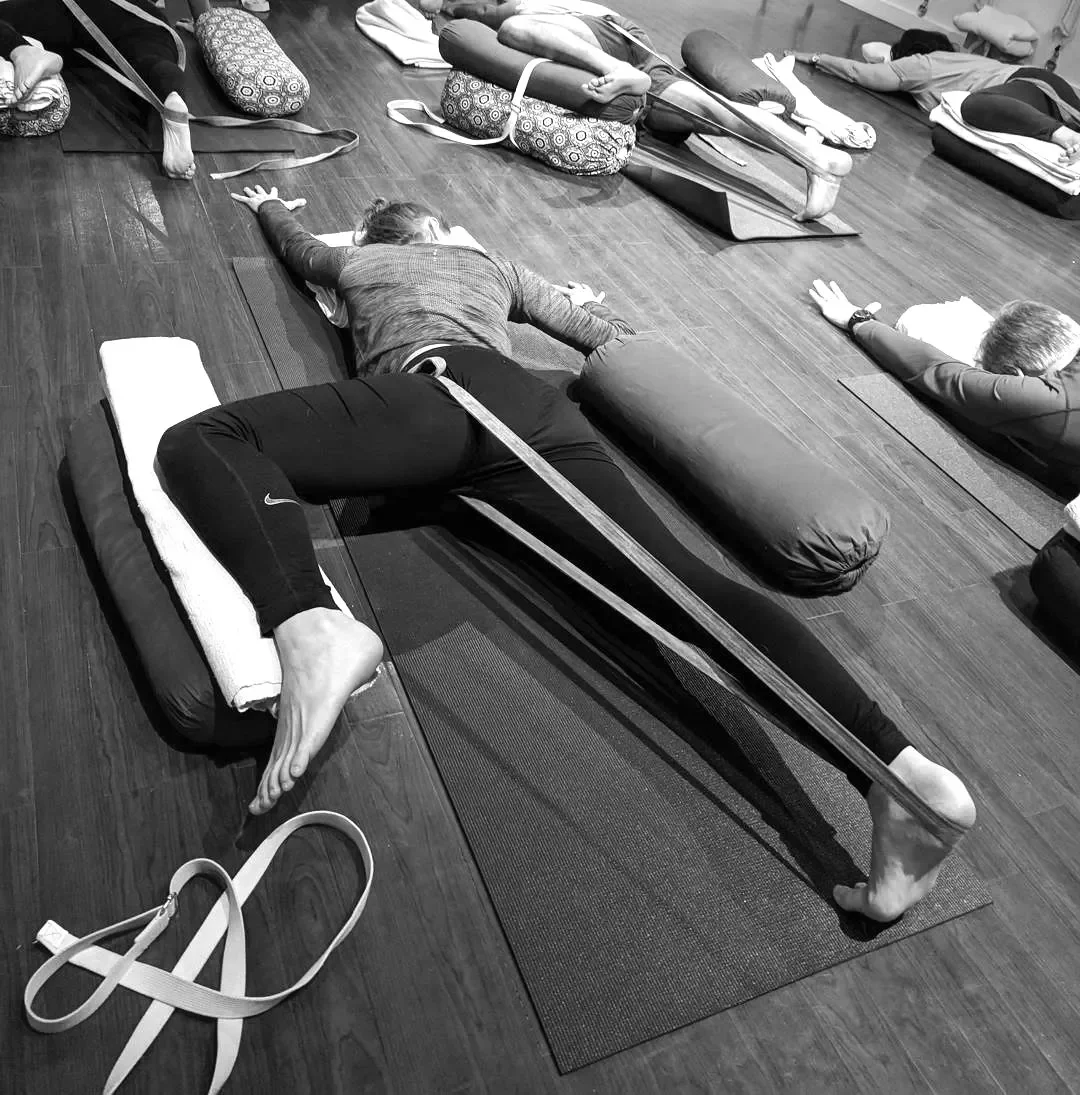
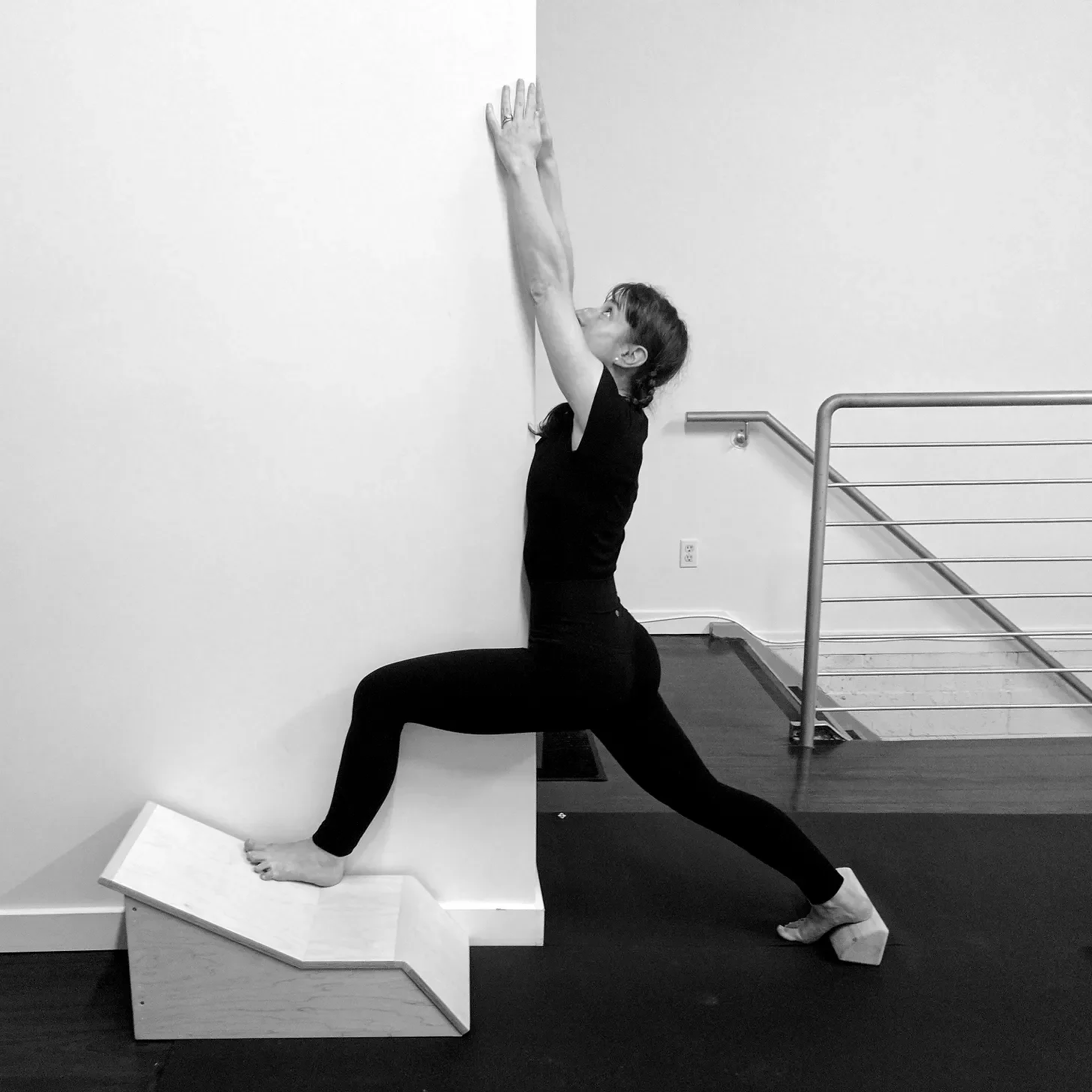
Some of the most powerful tools we use in Iyengar Yoga are props. Bolsters, blocks, belts, chairs—they’re not crutches, they’re our collaborators, our teachers, our tools. Props allow us to experience the full benefit of a pose without negatively stressing the areas we’re trying to heal.For someone with back pain, this might mean:
Using a chair in forward bends to keep the spine long and supported
Practicing backbends with spinal support to create spaciousness without compression
Lengthening tight hamstrings with a belt, reducing pull on the lower back
Alignment isn’t just physical—it’s also internal. When our attention is anchored in the body, when breath and action move in synchronicity, we begin to experience a different kind of ease. This alignment of mind and body creates the conditions for healing to take root. The pose becomes a place not just of physical support, but of mental clarity and calm. And that kind of alignment can often be more powerful than people realize.
Props: Support That Heals
Some of the most powerful tools we use in Iyengar Yoga are props. Bolsters, blocks, belts, chairs—they’re not crutches, they’re our collaborators, our teachers, our tools. Props allow us to experience the full benefit of a pose without negatively stressing the areas we’re trying to heal.
For someone with back pain, this might mean:
Using a chair in forward bends to keep the spine long and supported
Practicing backbends with spinal support to create spaciousness without compression
Lengthening tight hamstrings with a belt, reducing pull on the lower back
A Therapeutic Lens
As Certified Iyengar Yoga Teachers, we're trained to see the individual. That means taking into account not just the location of the pain, but its cause, the student's lifestyle, and even emotional state. Back pain is rarely just physical. There’s a feedback loop between our nervous system and our spine—and yoga offers us a way to interrupt the cycle of tension, fear, and guarding.
Awareness: The Subtle Shift That Changes Everything
Perhaps the most profound aspect of Iyengar Yoga is the cultivation of awareness. Pain has a way of dulling our connection to the body—often, we either disconnect to cope, or over-identify with what's hurting. Through steady practice, students learn to perceive more clearly: where they hold, where they overwork, where they collapse. With awareness comes choice—and with choice comes freedom.
Beyond Pain
While the immediate draw may be to get out of pain, students often stay with Iyengar Yoga because they discover something more. A deeper breath. A steadier mind. A sense of agency in their own healing.
Back pain may bring someone to the mat, but it doesn’t have to define the journey.
As BKS Iyengar famously said:
“Yoga does not transform the way we see things; it transforms the person who sees”.
FAQ
-
Many people find that Iyengar Yoga helps reduce back pain by improving alignment, building strength, increasing mobility, and developing greater body awareness. The practice focuses on addressing underlying movement patterns rather than simply managing symptoms.
-
When the body is well organized, muscles and joints can work more efficiently, reducing unnecessary strain on the spine. In Iyengar Yoga, alignment isn't about achieving a perfect shape—it's about finding the most supportive and functional organization for your unique body.
-
Yes. Props such as chairs, bolsters, blocks, and belts provide support, improve awareness, and make poses more accessible. They allow students to experience the benefits of a pose while reducing unnecessary stress on sensitive areas.
-
Absolutely. Iyengar Yoga is well known for adapting poses to the individual. Whether you're new to yoga or returning after an injury, the practice can be modified to meet your current abilities and needs.
-
Iyengar Yoga can be an excellent complement to medical care, but it isn't a replacement for appropriate diagnosis or treatment. If you're experiencing persistent or severe back pain, it's important to work with your healthcare provider alongside a qualified Iyengar Yoga teacher.
Want Po in your inbox?
Stay connected with new articles, videos, and updates from the studio.