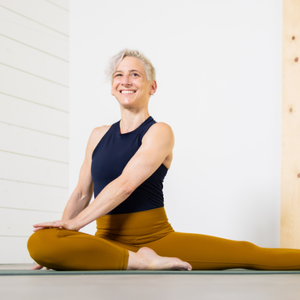
Iyengar Yoga Therapy That Meets You Where You Are
A Personalized Approach to Pain, Fatigue, and Healing
Table of Contents
Introduction
In today’s fast-paced world, more people than ever are turning to integrative approaches to manage chronic conditions—and not just as an afterthought, but as a vital part of their healing process. The World Health Organization has identified musculoskeletal disorders, cardiovascular disease, and mental health challenges like anxiety and depression as some of the leading causes of disability worldwide.
At the same time, there’s growing recognition that movement, breath, and rest—when applied with care and intelligence—can change the way we live in our bodies.
Research continues to highlight the potential of therapeutic yoga, and Iyengar Yoga Therapy in particular, as a low-risk, high-impact practice that supports resilience and recovery.
A 2021 review in The Journal of Bodywork and Movement Therapies found that Iyengar Yoga was especially effective in improving symptoms of lower back pain, stress, and mobility limitations—thanks in large part to its use of props and attention to alignment. Another study in Psychosomatic Medicine pointed to yoga’s ability to regulate the nervous system, lower cortisol, and elevate overall mood.
But what makes Iyengar Yoga Therapy different from a typical yoga class?
What is Iyengar Yoga Therapy?
Developed by BKS Iyengar, this method blends precise alignment, mindful sequencing, and the intelligent use of props to help students safely access the benefits of yoga—no matter their age, condition, or level of experience.
In a therapeutic setting, the practice is tailored. Carefully. It's not about pushing through or fitting yourself into a pose, but about building a practice around you. That might mean adjusting the timing, modifying a shape, or staying with one pose longer to allow the nervous system to settle.
Certified teachers observe each student closely and use tools like bolsters, blocks, belts, and chairs to restore function and balance. The aim is not perfection in form, but steadiness, ease, and healing from within.
When the body is supported—when we feel safe—the nervous system can begin to shift from guarding and bracing to releasing and regulating. That’s when real healing begins.
How Iyengar Yoga Therapy Supports Specific Conditions
This isn’t a ‘stretch class’ with props—it’s a structured, personalized process rooted in decades of clinical observation and tradition. Here are just a few ways it helps:
Chronic Back Pain & Postural Issues
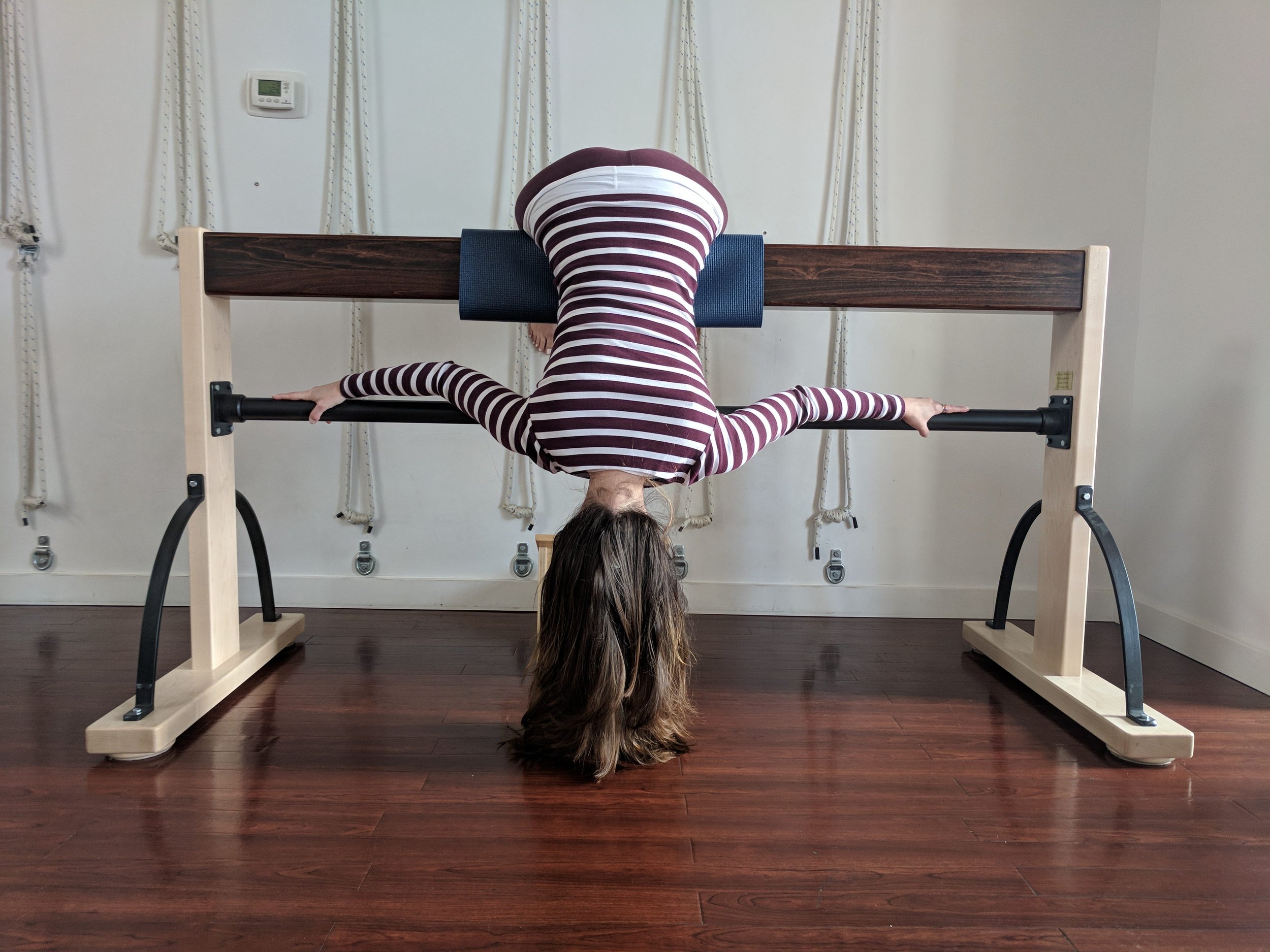
Back pain is one of the most common reasons people come to yoga therapy. Rather than work around the pain, Iyengar Yoga helps students work with it—using supported inversions, spinal traction, and postural refinement to create space, build stability, and relieve compression without further aggravating the area.
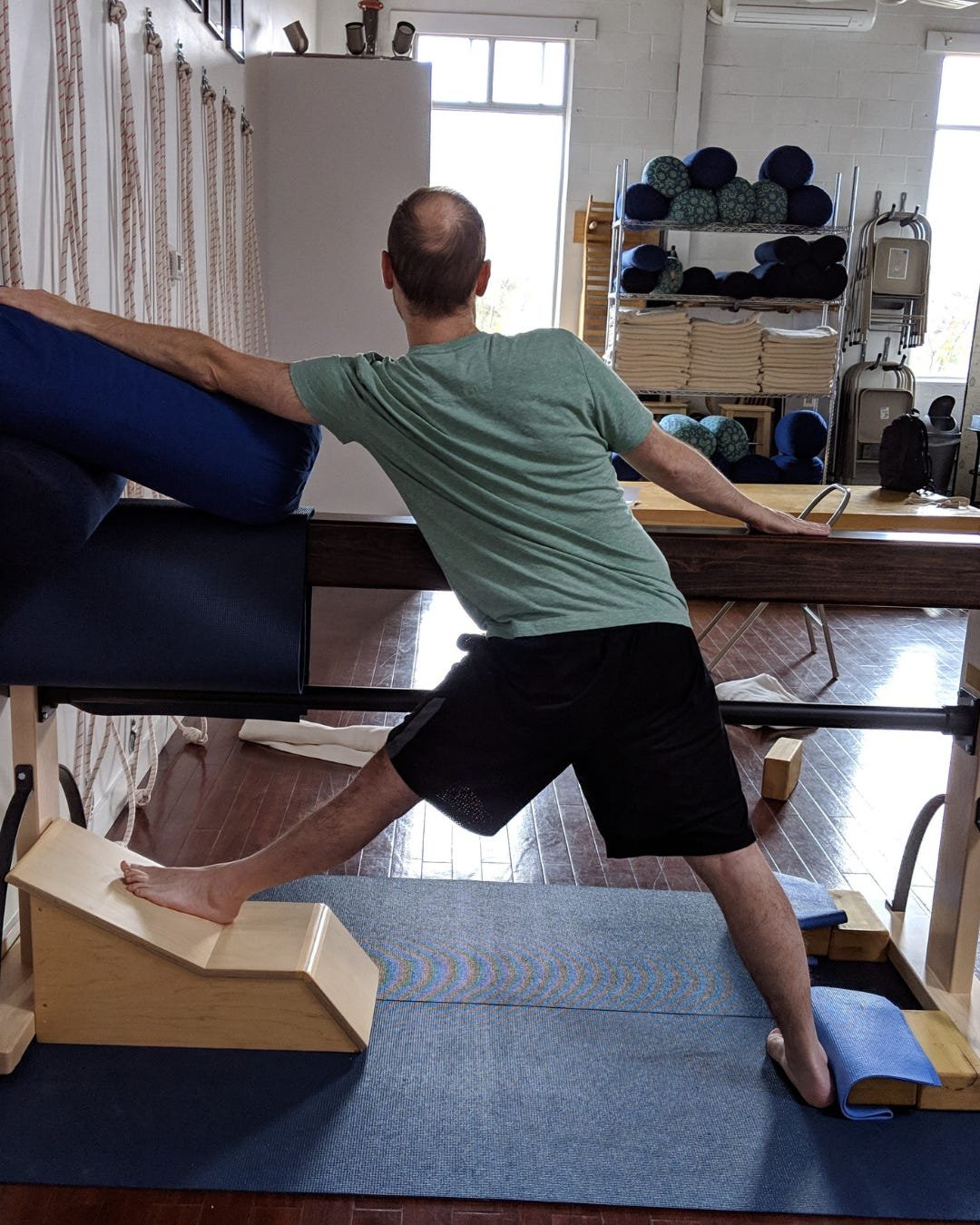
Equally important is the role of standing poses. These foundational asanas help develop strength and awareness in the feet, legs, and glutes—key muscle groups that support the pelvis, which ultimately forms the base of the spine. When the pelvis is stable and aligned, the spine has a solid foundation from which to lengthen and decompress. This bottom-up approach is a hallmark of Iyengar Yoga and essential in addressing the root causes of back pain.
Hypertension & Cardiovascular Health
Forward bends, gentle inversions, restorative poses, and an exhalative focus in select pranayamas have been shown to reduce blood pressure and quiet the mind. A clinical study in Hypertension Research found that yoga significantly lowered systolic blood pressure over 12 weeks—without medication.
Digestive Conditions (IBS, Bloating, Sluggish Digestion)
Therapeutic sequences often include gentle abdominal toning, twists, and supine postures that encourage peristalsis and relax the abdominal wall. These practices also stimulate the parasympathetic nervous system—key for healthy digestion.
Anxiety, Depression & Fatigue
While anxiety and depression often coexist, they’re not always approached the same way in Iyengar Yoga Therapy. For students with depression, inward-focused, passive poses can sometimes deepen their sense of heaviness. Instead, a more active and uplifting sequence—one that builds heat, strength, and a sense of accomplishment—can help lift mood and rekindle energy.
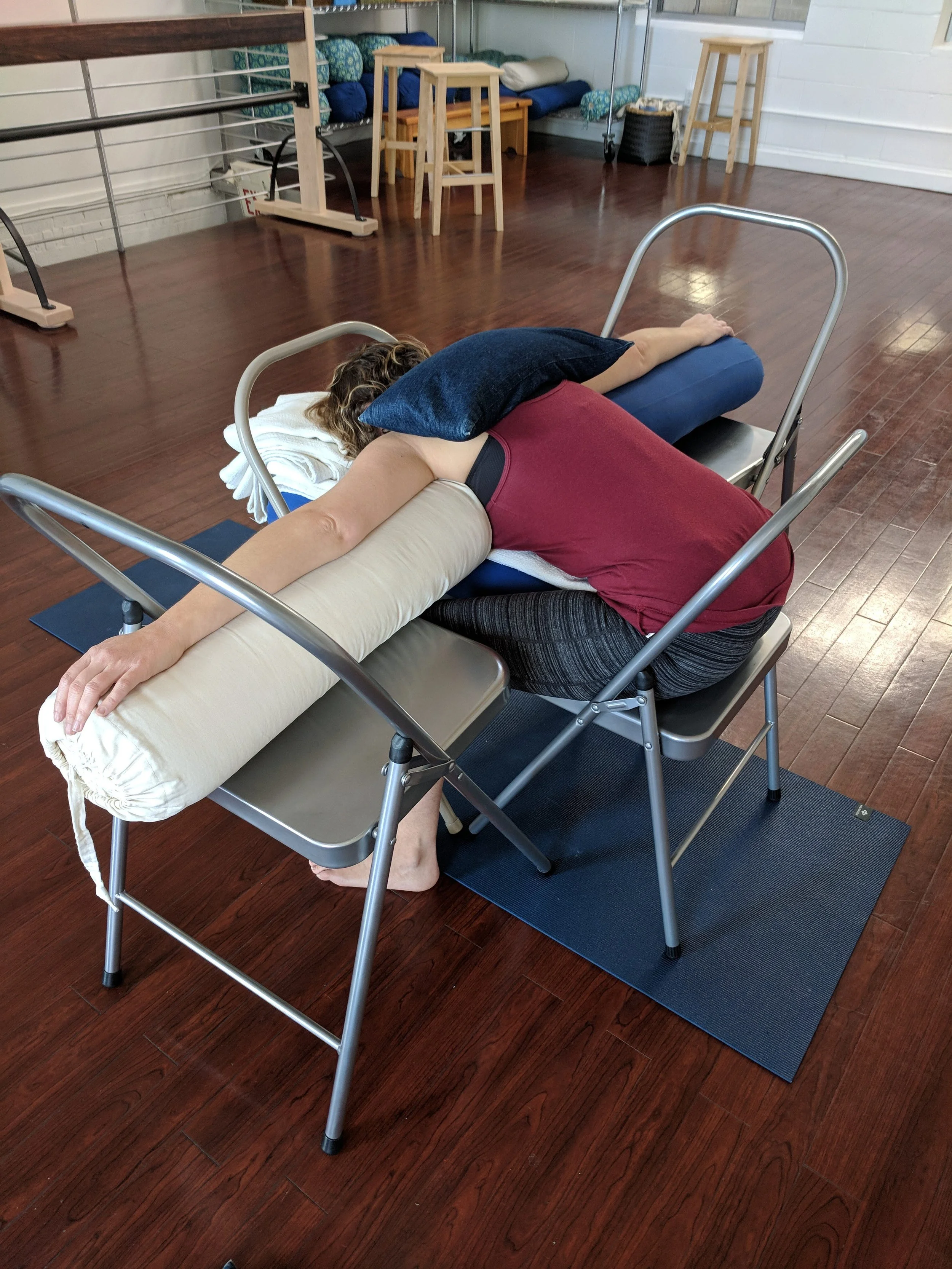
With anxiety, some students benefit from focused, dynamic work that helps anchor their attention and cut through mental noise. Others, however, may feel more overwhelmed by strong effort. For them, supported asanas—like forward bends, backbends, and inversions—help soothe the nervous system. Standing poses can also offer grounding and stability and ultimately encourage clarity of thought and improved focus.
Menopause & Hormonal Shifts
Targeted sequences—including supported backbends, cooling forward bends, and inversions—can help reduce hot flashes, irritability, and insomnia. By regulating the nervous and endocrine systems, the practice creates a steadying presence during times of transition.
How it Works for You
Iyengar Yoga Therapy is, at its core, a conversation. A student shows up as they are. The teacher meets them there. Sessions are held one-to-one or in small groups, allowing time to observe, adapt, and refine. A typical therapeutic class may include: A tailored sequence designed for your condition or concern and ongoing refinement. A holistic approach that emphasizes the regulation of your nervous system. Props used to make the asanas accessible, sustainable, and safe. Breath awareness and/or Pranayama. Education on home practice. The goal isn’t just to feel better during class—it’s to build a foundation for long-term well-being. As BKS Iyengar said: "Yoga teaches us to cure what need not be endured and endure what cannot be cured."
Is this Right for You?
If you’re living with a chronic condition—whether physical, emotional, or somewhere in between—and you’re looking for a thoughtful, structured approach, Iyengar Yoga Therapy may offer what you’ve been searching for. It can be especially helpful for: Recovery from injury or surgery, managing stress, burnout, or fatigue, and support alongside chronic illness
Where to Begin (In Person in Toronto)
Studio Po offers a Modified Practices (MP) Program that brings this therapeutic approach into a supportive community setting. Classes run Tuesdays from 4:00 – 5:30 PM EST, September through June. A minimum 3-week commitment is required. Classes are capped to ensure individual attention. Start dates are flexible; time/day is fixed. To apply, fill out the Modified Practices application form. After reviewing your information, we’ll be in touch to coordinate next steps.
A Note on Availability
Because of the personalized nature of this work, space is limited. Applications are reviewed on a rolling basis. We appreciate your patience as we ensure that the right teacher, time, and support are available to meet your needs.
Final Thought
Healing doesn’t always require heroic effort. Sometimes, it begins by being seen, supported, and given the space to reconnect—with your body, with your breath, and with what’s possible. That’s what Iyengar Yoga Therapy is all about.
REFERENCES
Tekur, P., Nagendra, H.R., Raghuram, N., & Nagarathna, R. (2012). Effect of yoga on quality of life of CLBP patients: A randomized control study. The Journal of Bodywork and Movement Therapies, 16(3), 316–324.
Saper, R.B., et al. (2017). Yoga, Physical Therapy, or Education for Chronic Low Back Pain: A Randomized Noninferiority Trial. Annals of Internal Medicine, 167(2), 85–94.
Pascoe, M.C., Thompson, D.R., Jenkins, Z.M., & Ski, C.F. (2017). Yoga, mindfulness-based stress reduction and stress-related physiological measures: A meta-analysis. Psychoneuroendocrinology, 86, 152–168.
Innes, K.E., Selfe, T.K. (2014). Yoga for adults with type 2 diabetes: A systematic review of controlled trials. Journal of Diabetes Research, 2016, Article ID 6979370.
Cramer, H., Lauche, R., Langhorst, J., & Dobos, G. (2013). Yoga for depression: A systematic review and meta-analysis. Depression and Anxiety, 30(11), 1068–1083.
Murthy, M.K., et al. (2016). Effect of yoga therapy on systolic and diastolic blood pressure in patients with hypertension: A randomized controlled study. Hypertension Research, 39(5), 376–381.
FAQ
-
Unlike a general yoga class, Iyengar Yoga Therapy is highly individualized. Teachers carefully adjust poses, timing, sequencing, and support based on your condition, symptoms, and capacity, with healing and nervous system regulation as the priority.
-
Yes. Supported inversions, spinal traction, restorative poses, and standing poses help relieve compression, improve postural awareness, and strengthen the muscles that support the pelvis and spine. This creates a more stable foundation for long-term back health.
-
Yes. The practice can be adapted depending on the student’s needs. Some benefit from more active, uplifting sequences, while others need supported poses and restorative work to calm the nervous system and improve emotional balance.
-
No. Iyengar Yoga Therapy is specifically designed to meet you where you are. Props like chairs, belts, blocks, and bolsters make the practice accessible regardless of age, flexibility, injury, or experience level.
Want Po in your inbox?
Stay connected with new articles, videos, and updates from the studio.