How to Choose an Iyengar Yoga Studio in Toronto
What to Look For Beyond the Schedule
Table of Contents
Bhagavad Gita, Chapter 4, Verses 7-8
If you are looking for Iyengar Yoga in Toronto, you have probably noticed that it is not easy to find. The city has no shortage of yoga studios, but genuine Iyengar instruction — taught by certified teachers who continue to study — is harder to come by than it should be.
At first glance, the decision looks straightforward. You compare locations, browse schedules, read a few reviews. These are sensible places to begin. Convenience matters because a class you can get to is a class you are more likely to attend.
But over the years, both as a student and as a teacher, I have come to appreciate that a yoga studio is not just a place where you exercise. It is an environment where you learn. The quality of the teaching, the care with which classes are planned, the questions that are encouraged, and the way your individual body is supported all shape what your practice becomes over time.
If you are looking for an Iyengar Yoga studio in Toronto, here are a few things I believe are worth paying attention to.
Begin with the Teaching, Not the Timetable
When people ask me how to choose a yoga studio, they are often surprised that I do not begin with the schedule or the pricing.
Instead, I encourage them to learn about the teachers.
In the Iyengar tradition, teaching is not a performance. A teacher is continually observing, adapting, and responding to the students in front of them. Two people may appear to be practising the same pose, but they may need entirely different instructions to experience its benefits safely and intelligently.
Good teaching is not about asking everyone to do the same thing. It is about understanding why a pose is being taught and finding the most appropriate way for each student to explore it.
This is one of the qualities that first drew me to Iyengar Yoga, and it continues to be one of the reasons I remain committed to the method.
Look for Teachers Who Continue to Learn
One of the beautiful aspects of Iyengar Yoga is that learning never really ends.
Certified Iyengar Yoga teachers complete years of dedicated training before they are qualified to teach independently. But certification is not the finish line. In many ways, it is the beginning of a lifelong study.
The best teachers continue to study. They seek guidance from more experienced teachers. They revisit familiar poses with fresh eyes. They remain curious.
Why does this matter?
Because our bodies are constantly changing.
A teacher who continues to learn develops an ever-expanding understanding of how to adapt the practice for different bodies, ages, stages of life, and varying challenges.
The same pose can offer something entirely different to someone recovering from an injury than it does to someone preparing for a more advanced practice. A thoughtful teacher knows how to recognize those differences and guide students to practise in a way that best serves each individual.
Notice Whether the Teacher Is Watching
This may seem like a small detail.
It is not.
One of the first things I notice when I visit a class is whether the teacher is truly observing the students.
Are they moving around the room?
Are they offering individual guidance?
Do they notice when someone appears uncomfortable or confused?
Do they adapt their instructions when they see that something is not working?
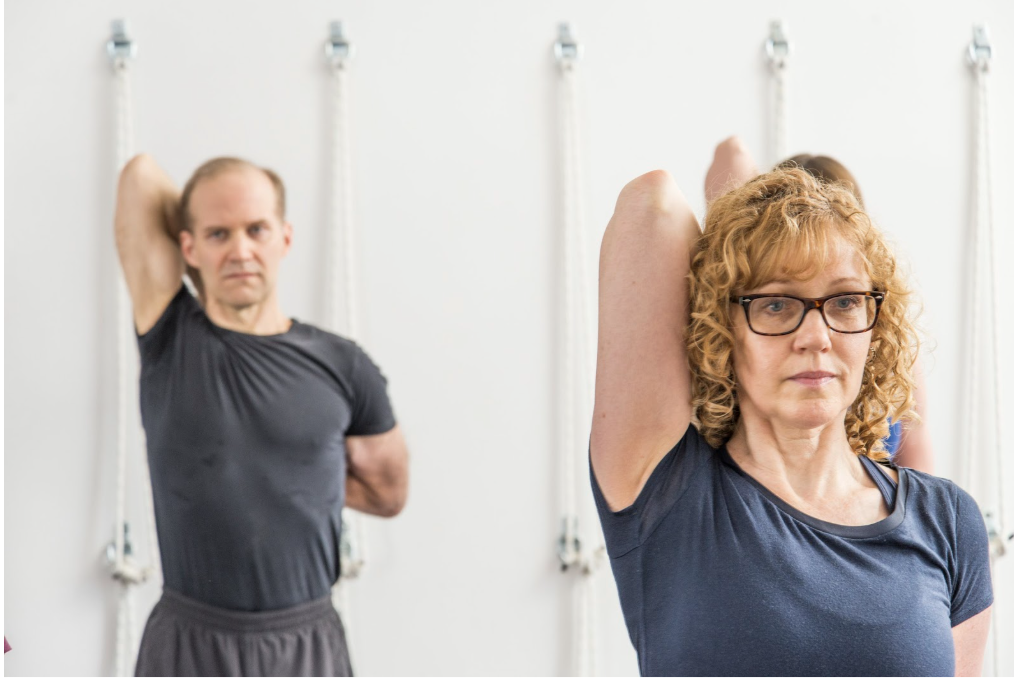
Observation sits at the heart of the Iyengar Method. Rather than only leading students through a memorized sequence from the front of the room, the teacher remains engaged with what is actually happening in the class. That ongoing conversation between observation and response creates an entirely different learning experience.
Students often tell me they appreciate being seen.
They are not corrected because of dogma, but supported in a way that helps them understand their own bodies a little more clearly.
A Good Studio Feels Safe to Learn
Many people arrive at yoga uncertain, a bit fearful, maybe even anxious.
They worry they are not flexible enough.
They wonder whether they will be the oldest person in the room.
They hope their back, shoulders, knees, or hips will not prevent them from participating.
These concerns are far more common than most people realize.
A well-run Iyengar Yoga studio creates an environment where those worries gradually begin to soften.
Students are encouraged to ask questions.
Props are available—not because they make the practice easier, but because they make the practice more accessible and also more intelligent.
Modifications are offered without embarrassment.
Progress is measured through understanding rather than performance.
There is not one right way—and there should not be.
One of the greatest strengths of Iyengar Yoga is its ability to meet people where they are while continuing to offer opportunities for growth.
Pay Attention to the Community
While the teacher may facilitate the learning experience, the community also matters.
Over time, a yoga studio becomes something more than a room filled with mats.
You begin recognizing familiar faces.
New students feel welcomed by those who have been practising longer.
Teachers remember your name, your tendencies in practice, your questions, and the progress you have made over the months.
The benefit of continuity is difficult to measure, yet it often becomes one of the reasons people hold their local studios and local teachers in such high regard.
In my experience, learning happens more easily in an environment where students feel comfortable enough to be beginners, curious enough to ask questions, and supported enough to try hard things.
Do not Expect to Know After One Class
This may be the most important advice I can offer.
We often evaluate a new experience after a single visit.
Was I comfortable?
Did I enjoy it?
Did I feel successful?
Those questions have their place.
But yoga unfolds slowly.
Sometimes the first class feels unfamiliar because you are being introduced to a different way of observing and being in your body.
Sometimes a teacher asks you to move in ways you have never considered before.
Sometimes what feels challenging today becomes the very thing that opens you up to new possibilities six months from now.
Some of the most meaningful lessons I have received in yoga were not the ones I understood immediately. They were the ones that continued revealing themselves through repetition, patience, and careful attention.
If a studio encourages that kind of learning, you have likely found something worth returning to.
The Right Studio Grows With You
Many people begin practising Iyengar Yoga because of something practical.
Back pain.
Stiff shoulders.
A knee injury.
Stress.
The desire to move more confidently as they get older.
These are all worthwhile reasons to begin.
But over time, the practice becomes something more.
You start noticing small changes that extend beyond the poses themselves. You become more attentive. More patient. More responsive to your body. You begin asking different questions—not only about how a pose looks, but about how it feels, what it teaches, and what it reveals.
That kind of learning does not happen overnight.
It develops quietly, one practice at a time.
Choosing an Iyengar Yoga Studio in Toronto
If you are searching for an Iyengar Yoga studio in Toronto, I hope you will look beyond the timetable and introductory offer.
Ask about the teachers.
Notice how students are supported.
Observe whether the teaching encourages curiosity rather than performance.
Give yourself permission to attend more than one class before deciding whether a studio feels like the right fit.
A good yoga studio does far more than offer classes. It provides an environment where learning can continue for years, where your practice evolves alongside your life, and where thoughtful teaching helps you understand your body more clearly than you did when you first walked through the door.
What We Hope You Will Find at Studio Po
When I created Studio Po, my hope was not simply to open another yoga studio in Toronto. It was to create a space where students could take the time to learn.
Iyengar Yoga has taught me that meaningful change rarely happens all at once. It develops quietly through careful observation, thoughtful guidance, and the willingness to return to practice, again and again. I wanted our studio to reflect those same values.
Whether someone arrives because of back pain, curiosity, a desire to move more freely, or simply because they are looking for a different approach to yoga, my hope is that they feel welcomed exactly as they are. Every body is different, every practice unfolds differently, and there is no expectation that everyone should move in the same way.
At Studio Po, we value questions just as much as answers. We believe that learning happens through exploration, not performance, and that a supportive community is just as important as thoughtful teaching.
If you are looking for Iyengar Yoga in Toronto, I hope you will find a studio where you feel both supported and genuinely engaged in learning. Whether that is with us or elsewhere, my wish is that you discover a place where your practice can continue to grow for many years to come.
New to Iyengar Yoga?
If you are beginning your practice, you may find our guide to what Iyengar Yoga is and how the method works helpful. For practical questions about booking, what to bring, and studio etiquette, see our Toronto studio FAQ.
Want Po in your inbox?
Stay connected with new articles, videos, and updates from the studio.