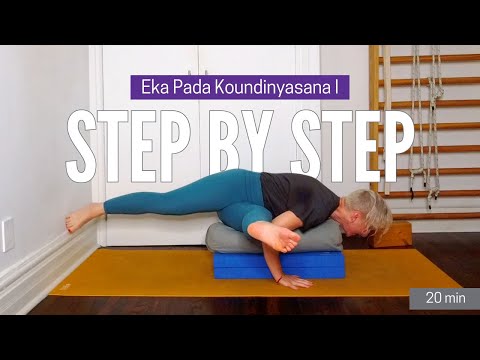
45-Min Sirsasana for Beginners: Learn Headstand Safely | Iyengar Yoga
A 45-minute Iyengar Yoga practice focused on learning Salamba Sirsasana (Headstand) in a safe and progressive way. The sequence begins with poses that help mobilize the thoracic spine, an area that often limits students in inversion work, before moving into supported and independent approaches to Headstand.
Inversions are a cornerstone of the Iyengar Yoga method. This class explores not only how to get upside down, but also how to prepare the body intelligently and develop the confidence needed to approach Headstand with greater understanding and stability.
Continue your practice inside Po Online where we build on these foundations with structured classes, progressions, and deeper study.
About This Practice
For many students, Headstand is one of the most intriguing and intimidating poses in yoga. While the image of balancing upside down often captures attention, successful inversion practice begins long before the feet leave the floor.
This sequence focuses on preparing the body for Headstand by addressing common limitations, particularly through the upper back and thoracic spine. Improved mobility and awareness in these areas often create a more supportive foundation for inversion work.
From there, the practice explores both supported and independent approaches to Salamba Sirsasana. The emphasis is not on rushing toward a result, but on building understanding, confidence, and the fundamental skills that support a sustainable Headstand practice.
What You'll Practice
Salamba Sirsasana (Headstand)
Thoracic spine mobility and preparation
Upper back release techniques
Supported Headstand variations
Independent Headstand preparation
Building strength for inversions
Developing confidence upside down
Progressive approaches to learning Headstand
When to Use This Practice
When learning Headstand for the first time
To improve preparation for inversions
When working on upper back mobility
To develop confidence in inversion practice
As a dedicated Headstand study session
Who This Is For
Students new to Headstand
Practitioners developing inversion skills
Anyone working on thoracic spine mobility
Students seeking a progressive approach to inversions
Practitioners building confidence upside down
Frequently Asked Questions
Why focus on the thoracic spine before Headstand?
A restricted thoracic spine can make inversions significantly more challenging. Improving mobility in the upper back often creates better organization, support, and comfort in Headstand.
Is Headstand appropriate for beginners?
Yes, when approached progressively and with appropriate instruction. This practice is designed specifically to help beginners build the skills and understanding needed to learn safely.
Why use supported Headstand variations?
Supported variations help students understand important actions and develop confidence before attempting more independent versions of the pose.
How long does it take to learn Headstand?
The timeline varies from student to student. Factors such as strength, mobility, confidence, and previous experience all influence the learning process.
Do I need to balance independently to benefit from this practice?
No. Many of the benefits come from the preparation work and supported variations. Learning the foundational actions is valuable regardless of whether you balance independently.
What makes Headstand such an important pose in Iyengar Yoga?
Headstand is considered a foundational inversion because it develops awareness, concentration, strength, and balance. It also serves as a gateway to many other inversion variations and explorations.
Continue Your Practice
If you enjoyed this class, you can continue your practice across the Studio Po ecosystem:
Practice in-person at Po Toronto
Explore full-length classes inside Po Online
Read reflections and insights on Stephanie’s Blog