Linking in Practice
How One Pose Teaches Another
Urdhva Prasarita Padasana
Table of Contents
Introduction
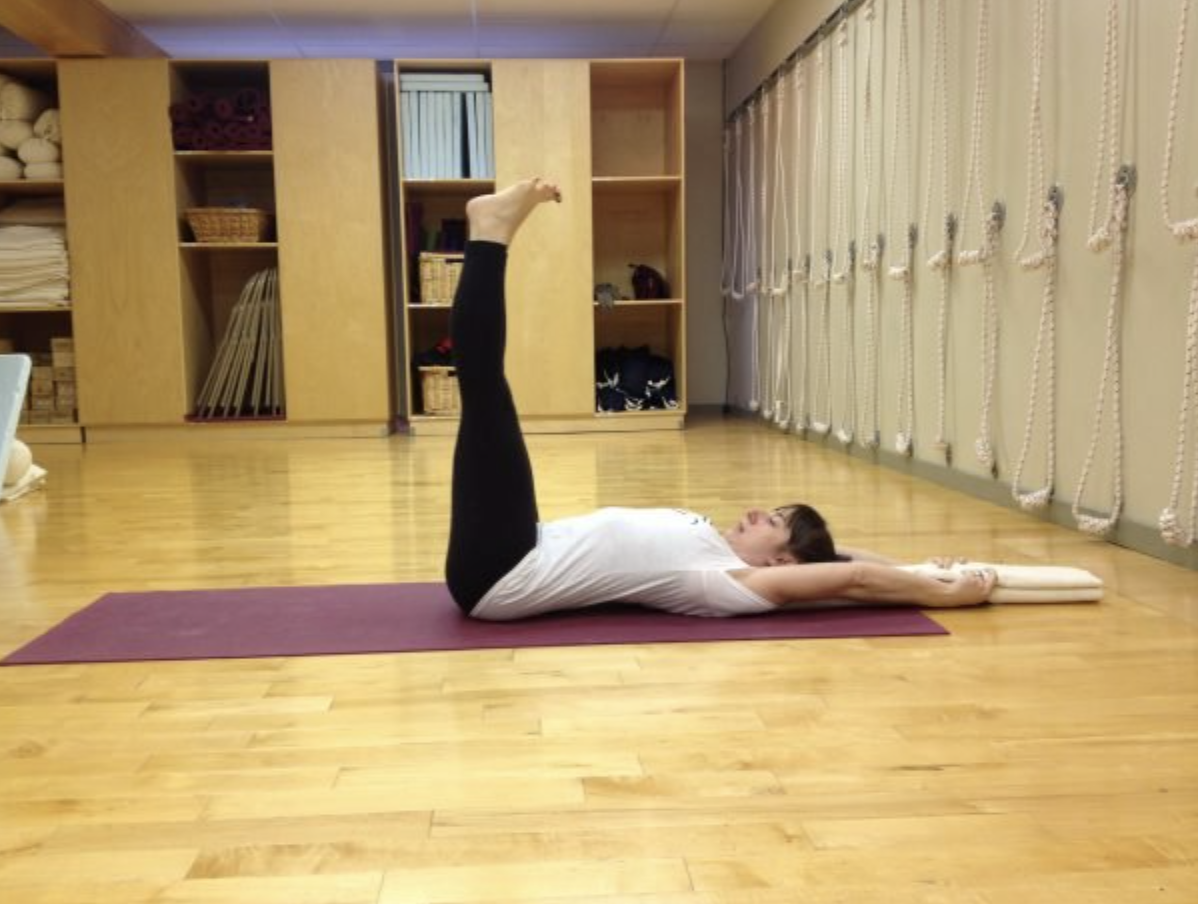
There was a period in my practice when I kept returning to Urdhva Prasarita Padasana. Not out of obligation, but because it gave me something specific to work on.
I lifted my legs. Lowered them. Paused partway. Changed the position of my arms. Repeated the actions in different ways to see what changed and what didn’t. I paid attention to the inner legs, outer legs, the front and back of the thighs. I watched how the heels moved, how the feet met the floor.
The pose became a place to work, not just something to get through.
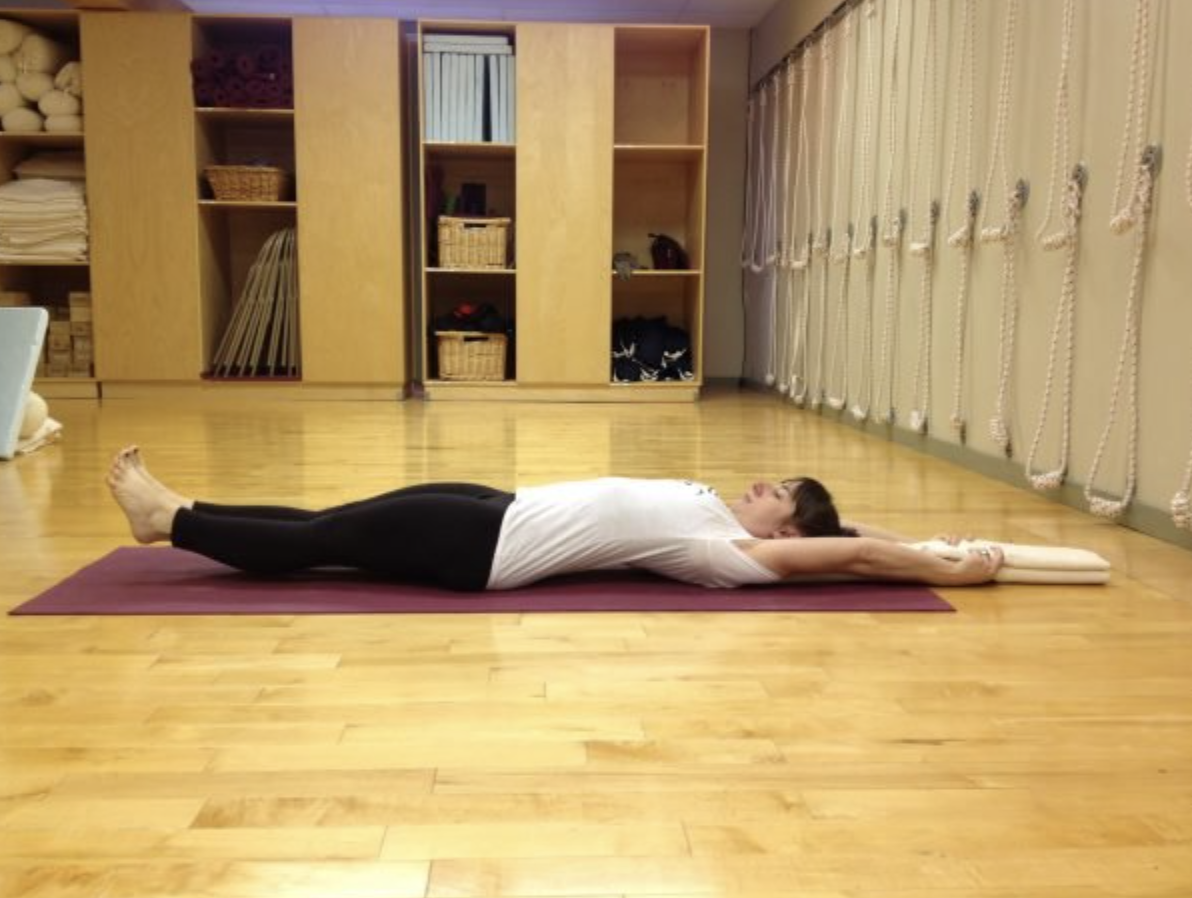
At a certain point, I began to feel a clear lengthening from the middle groins through to the second toes as I lowered my legs. At the same time, there was a corresponding “up and back” action in the abdomen.
That feeling was oddly familiar but at the same time refreshingly clear.
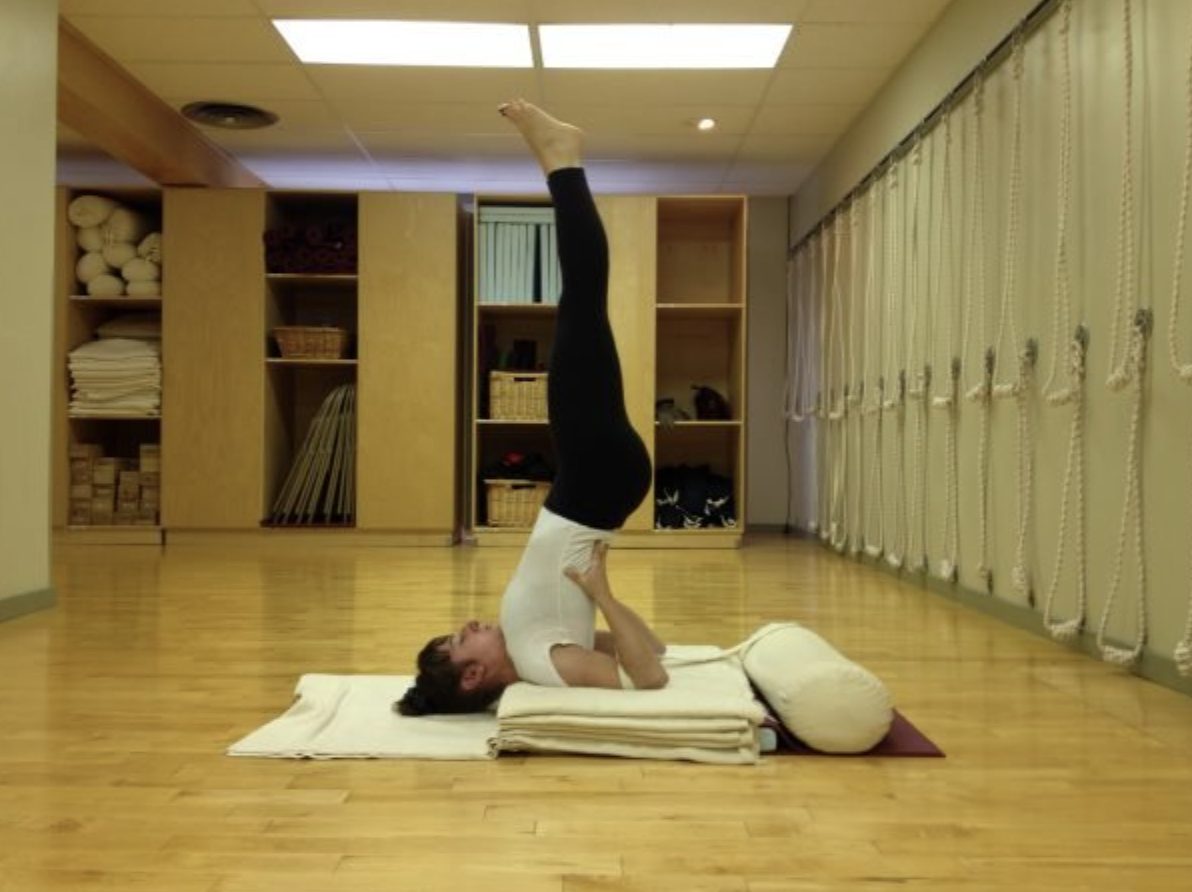
I realized that it was what I had been chasing in my Salamba Sarvangasana.
When Understanding Isn’t Enough
I’ve always found Sarvangasana challenging. Because of my structure and history with spinal issues, I have difficulty keeping the weight of my legs properly ascending. The weight tends to drop into my lumbar spine, and when it does, I feel it immediately. When I look at photos, I can see it: the thighs drop, the groins narrow, and the pose loses lift.
Tight groins are a consistent pattern for me. They show up in backbends, in standing poses, in many places.
For a long time, I understood what I was meant to do in Sarvangasana. I had heard the instructions and could repeat them. But that kind of understanding only goes so far. Until the body has a clear experience of an action, the instruction doesn’t fully land.
Urdhva Prasarita Padasana gave me that experience.
It allowed me to feel the action in a way that was accessible and repeatable. Once that was established, I could begin to look for the same action in Sarvangasana. The instructions made more sense because they connected to something real.
The pose didn’t suddenly become easy, but it became workable.
Lowering my legs in Urdhva Prasarita Padasana
What Is “Linking” in Iyengar Yoga?
This is where linking becomes so valuable.
Linking is a fundamental part of the Iyengar approach. One pose helps you understand another. An action learned in one context becomes available in a different one.
It’s not about making poses look the same. It’s about recognizing relationships.
Linking gives you a way to study. Instead of just following instructions, you start to investigate:
Where else does this action appear?
What changes when I apply it here?
What stays consistent?
The practice becomes active.
The Body as a Field of Study
As B. K. S. Iyengar wrote:
“To a yogi, the body is a laboratory for life, a field of experimentation and perpetual research.”
This is at the heart of the method.
Practice isn’t meant to be a passive, “follow the leader” experience. The teacher directs your attention, but you have to do the work of seeing, feeling, and making connections.
That’s where learning happens.
We’re not just doing poses. We’re studying them.
From Doing to Understanding
Over time, this kind of work changes how you practice.
You’re not starting from scratch in every pose. You’re building understanding. You begin to recognize patterns and carry information from one asana into another.
That continuity steadies the mind. There’s less guesswork, less mental noise, because your attention has a clear direction.
The details don’t become a distraction.
They become the method.
Try This in Your Practice
Choose two poses: one where an action is clear and accessible, and another where that same action feels difficult or inconsistent.
Start with the more accessible pose. Take a few minutes to repeat it in a simple, deliberate way. Notice one specific action—not everything, just one. For example, the lengthening from the middle groins through the legs, or the way the abdomen responds.
Then move to the second pose and look for that same action.
Don’t expect it to appear in the same way. Instead, ask:
Can I recognize even a trace of it here?
What changes when I look for it?
What gets in the way?
If it’s not clear, go back to the first pose and repeat the process. Move between the two. Let one inform the other.
This is the work.
Over time, these kinds of connections build understanding. And that understanding carries forward, from one pose to the next.

A Question for Your Practice
Do the details of a pose help you focus, or do they sometimes feel like too much?
And have you found a link in your own practice—something that clarified another pose?
FAQ
-
Linking is the process of applying an action learned in one pose to another. It helps build understanding by revealing relationships between poses.
-
Repetition allows you to observe more clearly. With each attempt, the body begins to recognize specific actions and respond more precisely.
-
Understanding an instruction intellectually is different from experiencing it physically. The body needs repetition and clarity before the action becomes accessible.